
Description
Book Specification
| Item Code: | NAJ641 |
| Author: | Dr. R. Vidyanath |
| Publisher: | Chaukhamba Sanskrit Pratishthan |
| Language: | English |
| Edition: | 2011 |
| Pages: | 264 |
| Cover: | Paperback |
| Other Details | 8.5 inch x 5.5 inch |
| Weight | 300 gm |
Book Description
Foreword
In the universe, the emergence of human life form is an important phenomenon in that it provides a unique opportunity to lead a purposeful life rather than indulgence in sensual ism and fulfillment in terms of service to oneself, to fellow beings and to God. Those accomplishments and their results pervade the ‘life here and life hereafter’. Such pursuits invariably presuppose (i) leading of an orderly and disciplined life, (ii) a code of conduct and (iii) clearly defined goals. These factors in their strict positive sense are collectively covered under the term “Purusharthas” in the Sanataria Oharma to which Ayurveda has its allegiance.
To live as a human being is thus a pursuit of specific purpose which calls for the maintenance of sound physical and mental health. A healthy body and mind are the essential prerequisites to be able to perform the demanding task. This point is well reflected in the AarshaVaakya:
Dharmartha Kama Mokshanam Aarogyam Mulamuttamam.
Ch. Suo 1115
Maintenance of health is by itself an in-built mechanism of the systems that work within a living body keeping in terms with the internal environment (homoeostasis) and the external environment (ecological balance). Nature also imposes a duty on the composite and holistic unit (the individual) to endeavour to maintain the regulating mechanisms with utmost care to ensure preservation and promotion of health. Any lapse by the individual may give rise to a sustained disturbance in the equilibrium -internal and external -which may be reversible or irreversible and may result in mainfestation of disease ensured by death.
Ayurveda recognizes the presence of three basic constituents which govern and represent the varied and vital mechanisms at the micro and macro levels in the body. These are Doshas, Dhatus and Malas. During the incessent activities of the living systems throughout the span of life several by-products are continually formed some of which are recycled and those which are in excess or which are rendered irreversible must be excreted in the process. Nature provides an in-built mechanism for such disposal but there also it imposes compulsion on the individual to assist and take care of the natural processes to ensure maintenance of the equilibrium. Such involvement for the maintenance of the equilibrium (Samayoga) is an unavoidable function of a living being for its healthy existence and survival.
Preface
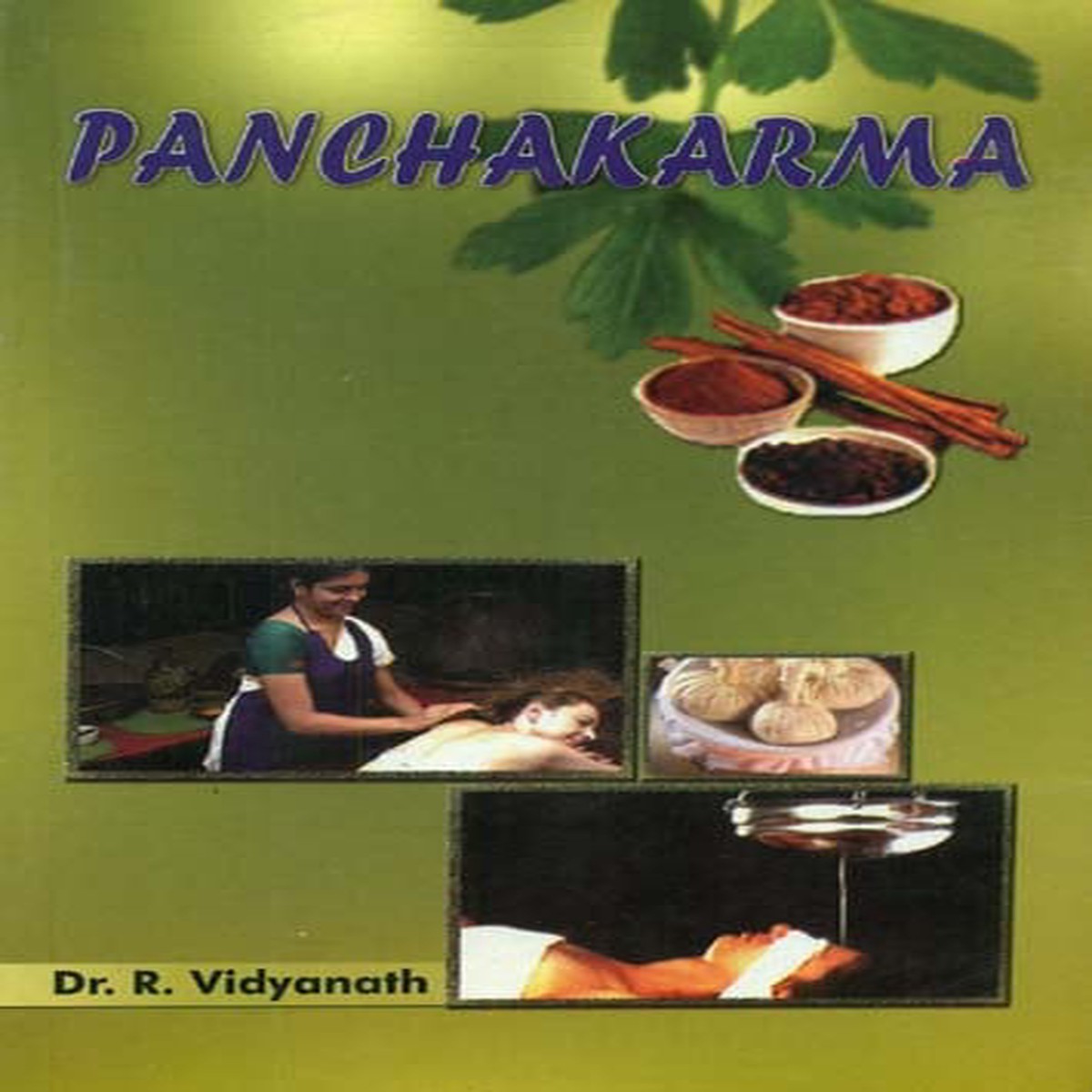
‘Panchakarma‘ means the five therapeutic techniques of the unique speciality of Ayurveda viz., Vamana, Virechana, Vasti, Nasya and Rakta Mokshana. Along with the above Classical Panchakarmas Dhara, Pizichil, Navara khizi, Sirovasti and Sirolepa are the Keraliya Panchakarmas which are much popular all over India in the recent days.
Though we are having sufficient options to treat a number of diseases in a confident manner, most of the Ayurvedic Physicians are not practicing these therapeutic techniques. The reasons may be
* Due to lack of sufficient practical knowledge regarding these techniques.


Reviews
There are no reviews yet.